The best fabric for restaurant uniforms is the one that still looks good after six months of long shifts, kitchen heat and daily washing. A beautiful design in the wrong fabric fades, shrinks or sticks to your staff by the second week.
In the Philippines, restaurant teams work in heat, humidity and steam, often for 10 hours or more. Your uniform fabric affects how comfortable your staff feel, how professional they look to guests, and how often you need to replace uniforms.
This guide explains what to check, which fabrics work best for each role, and the mistakes we see most often when restaurants order uniforms.
5 things to check before choosing a fabric
- Breathability. Can air move through it? In a hot dining room or kitchen, a fabric that traps heat makes staff tired and sweaty. Look for cotton-rich or open-knit fabrics like Lacoste pique, honeycomb or Aircool mesh.
- Durability after washing. Restaurant uniforms are washed every day or two. Ask how the fabric holds its shape, colour and size after 50+ washes. Poly-cotton blends and twill usually last longer than 100% cotton.
- Stain and spill resistance. Sauces, oil and coffee are part of the job. Darker colours and tighter weaves hide stains better. Light colours in loose weaves show everything.
- Comfort and movement. Servers carry trays and bend all day; cooks reach and lift. Choose fabrics with some stretch or a relaxed fit for these roles.
- Repeatability. You will hire new staff and reorder. Pick a fabric your supplier can source again in the same colour, so new uniforms match the old ones.
Restaurant uniform fabric guide
| Fabric | Best for | Why it works | Watch out for |
|---|---|---|---|
| Lacoste (pique knit) | Server and cashier polos | Breathable, smart, keeps its shape, takes embroidery well | Lower-grade pique pills; ask for a heavier GSM |
| Honeycomb | Polos for hot dining areas | Open texture lets air through, feels cool | Can snag on rough surfaces |
| Aircool / dri-fit mesh | Outdoor service, delivery, high-heat roles | Wicks sweat, dries fast, light | Can look sporty; less formal |
| Cotton twill | Aprons, chef coats, kitchen shirts | Strong, holds stitching and embroidery, easy to wash | Wrinkles; may shrink if 100% cotton |
| Poly-cotton (CVC, PCT) | Button-down shirts, everyday tops | Less shrinking and fading, easy to iron | Slightly warmer than pure cotton |
| Brushed / peach twill | Chef coats, manager shirts | Soft hand feel, looks premium | Shows oil stains in light colours |
| Armani-type suiting | Trousers, vests, manager sets | Sharp drape, wrinkle-resistant | Too warm for kitchen work |
No single fabric is best for every role. Most restaurants use two or three fabrics across the team.
Best fabric by role
Servers and front-of-house. Guests see them up close, so the fabric must look neat all shift. Lacoste or honeycomb polos, or a poly-cotton button-down, paired with stretch trousers. Choose a mid or dark colour if your menu has sauces.
Kitchen staff and cooks. Heat and grease are the main challenges. Cotton twill or brushed twill chef coats breathe and hold up to hot washes. For very hot kitchens, add Aircool mesh panels at the back or underarm.
Bar team. Bartenders move a lot and handle liquids. A poly-cotton shirt with a twill vest or apron gives a sharp look that cleans easily.
Cashiers and managers. They need to look a step more formal. Poly-cotton or peach twill shirts with Armani-type trousers keep a crisp line from opening to closing.
Aprons. Use a tight cotton twill or canvas. It protects clothes, takes embroidery well and survives daily washing. Black, brown and navy hide stains best.
Common mistakes to avoid
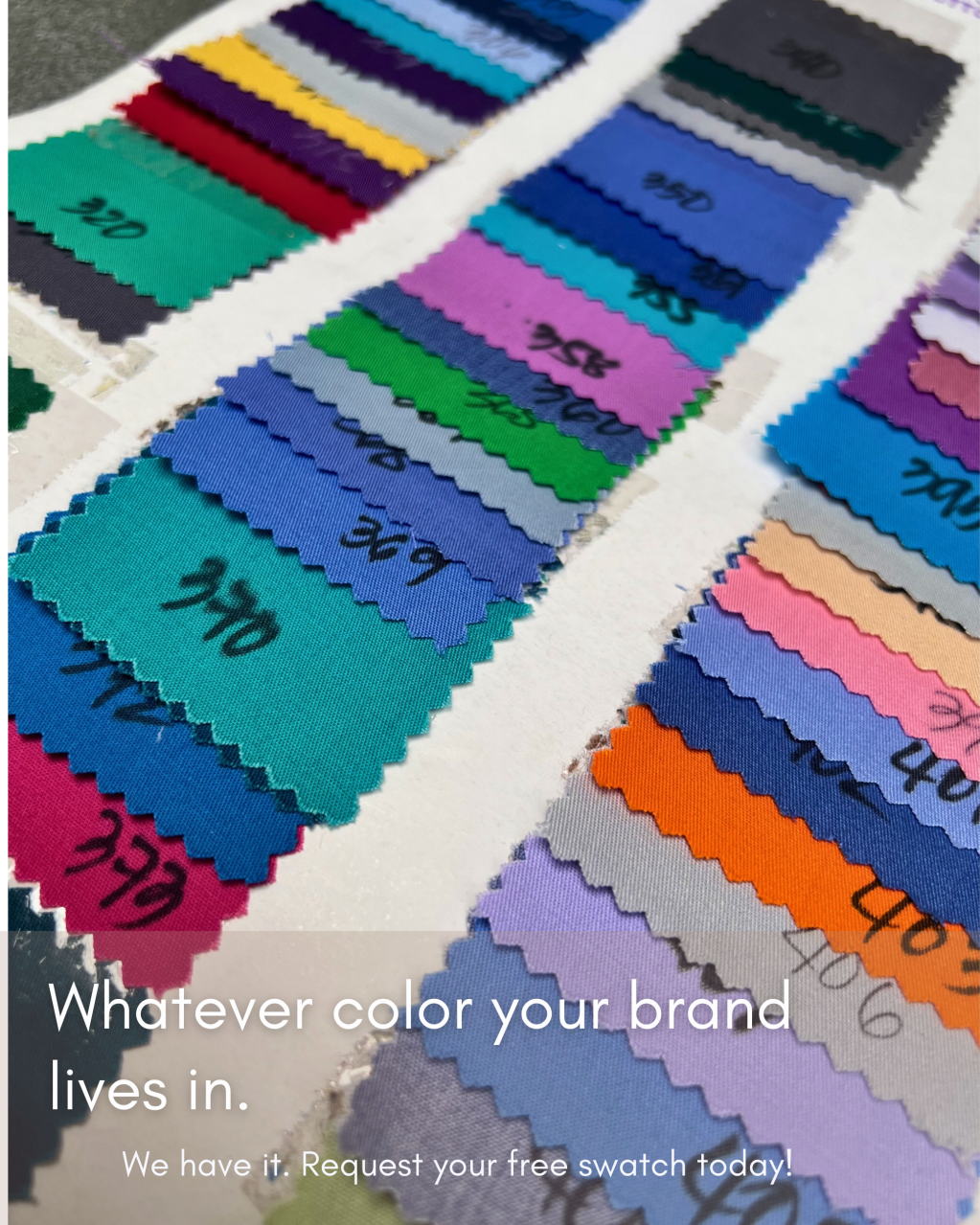
- Choosing by photo alone. A fabric that looks good online may feel hot or thin in person. Always ask for a swatch or sample.
- Picking the cheapest fabric. Low-cost fabric fades and shrinks fast, so you reorder sooner. Compare cost per month of wear, not cost per piece.
- One fabric for the whole team. Kitchen and dining room staff face different conditions. Match fabric to the job.
- Ignoring reorders. A rare fabric or colour may be impossible to match next year. Choose fabrics your supplier keeps in regular stock.
Quick checklist before you order
- Touch and test a fabric swatch for each role
- Approve one sample garment before bulk production
- Confirm the colour can be reordered later
- Ask about shrinkage and washing instructions
- Plan at least 3 sets per staff member so uniforms rotate
Frequently asked questions
What is the best fabric for restaurant uniforms in hot weather?
Lacoste pique, honeycomb and Aircool mesh are the coolest choices for polos. For shirts and chef coats, cotton-rich twill breathes better than 100% polyester.
Is cotton or polyester better for restaurant uniforms?
A poly-cotton blend usually gives the best balance. Cotton keeps staff cool, and polyester helps the uniform keep its shape and colour after many washes.
What fabric is best for chef coats?
Medium-weight cotton twill or brushed twill. It protects against heat and splashes, breathes, and handles hot washing.
How many uniform sets does each staff member need?
At least three: one being worn, one in the wash and one spare. Busy restaurants with daily washing often order four or five.
Not sure which fabric fits your team?
Uniform Division helps restaurants, cafés and hotels choose fabrics that suit each role, from server polos to chef coats and aprons. We show you real swatches, make a sample before bulk production, and keep your fabric and design on file so reorders match.
Minimum order is 12 pieces per design. Send us your headcount, roles and target date through Facebook Messenger or email at team@uniformdivision.com, and we’ll recommend fabrics and send a quote within the day.


Leave a Reply